

ISSUE 11: Authenticity is not a strategy
There's a lie that's hiding in "just be yourself". And it's costing your business.

Last week I wrote about founder lore – the idea that your built-in story, your point of view, the specific thing you’re building against, is the most underused positioning asset you have. And I stand by it. It is an asset.
But fuck me, did the DMs come in thick and fast, all roughly echoing a similar gripe: “I’ve been doing this. I’ve written my story. I’ve been showing up authentically. My brand still isn’t growing.”
I sat with it for a little bit, considering my response, because they weren’t wrong to feel exasperated. They’d been told, repeatedly and convincingly, that this was the work. The founders in my DMs hadn’t failed, but they’ve been set up to.
There’s a single piece of guidance that has steadily polluted the online battleground for attention. And trouble is, once you hear something so many times, it stops sounding like advice, and your brain stores it away as fact.
Just be yourself. Show up consistently. Let people see the real you.
I’m not here to tell you it’s wrong, exactly. But I’m here to tell you it’s incomplete in a way that is costing founders real money, real positioning, and real opportunity. Because authenticity, as it’s currently being sold, is not a brand strategy. It’s a starting condition. And mistaking one for the other is why so many founders are building brands that feel genuine but don’t grow.
The lie that’s hiding in “just be yourself”
The advice may have made sense when it was first given. A decade ago, authenticity felt like a genuine point of difference. A welcome contrast to corporate sanitisation, to airbrushed unreality, and to the brand-as-facade era that social media was only just beginning to dismantle. Being human, specific, and real was differentiation, because most brands weren’t doing it. But that’s no longer true.
Every founder is authentic now. Every brand has a story. Every Instagram grid has the behind-the-scenes shot, the candid caption, the founder looking directly down the lens telling you what they believe in. Authenticity has become the default register of founder-led marketing, which means that, on it’s own, it has ceased to be a differentiator.
When everyone is doing the same thing, the thing stops being a strategy. It becomes table stakes. The floor, even. And you cannot build a compelling brand from the floor.
I hate to say it, but a significant portion of what the brand industry sells as “strategy” is, in practice, a more sophisticated version of the same advice. Tone of voice documents that say “warm but authoritative.” Brand positioning decks that land on “honest and human.” Differentiation frameworks that, when you strip back the language, amount to: be yourself, but with better fonts.
The aesthetics get more considered, the vocabulary gets more elevated, and the PDF page count goes up. But the thinking underneath it, the actual commercial and cultural logic of why anyone should choose this brand over another one, often isn’t there. Because “be authentic” on it’s own doesn’t answer the question that brand strategy exists to answer: why you, specifically, when someone else offers something similar for less?
Don’t stop at the pulse
Cult brands have never built desire through authenticity alone. Not once. They built desire through something considerably more demanding.
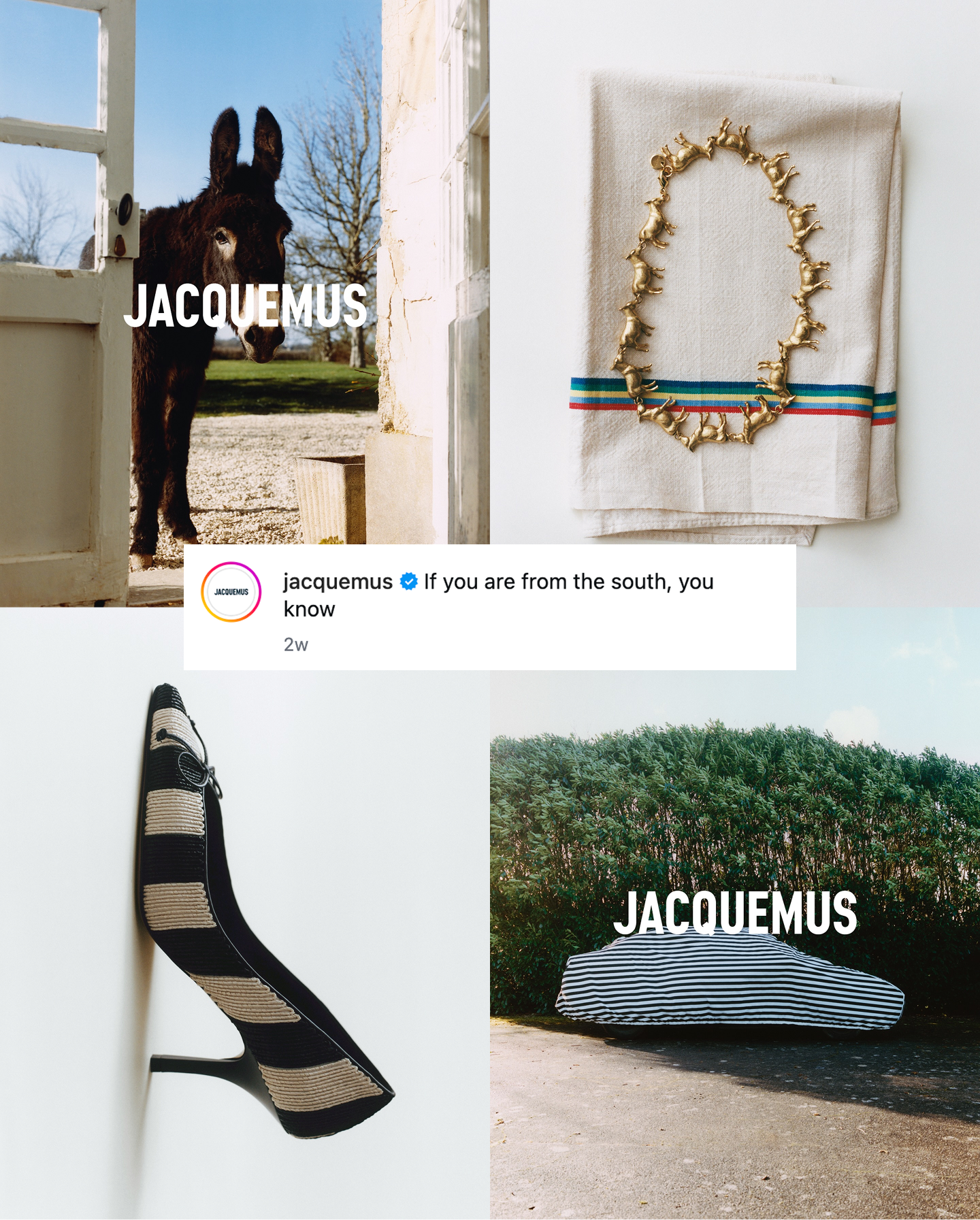
Take Jacquemus. I’ve written before about how Simon Porte Jacquemus is one of the clearest examples of a founder whose personal story forms the brand – the south of France, his childhood, his mother, the sun, the simplicity, the provocation. That intimacy is real, and it’s irreplaceable. No competitor can copy his memories, his references, his contradictions. The founder’s story collapses the distance between brand and belief in a way no corporate playbook can manufacture.
But that personal story on it’s own is merely a house of cards without the point of view that it informs, the conviction it makes possible, and the restraint that makes it believable.
The founder lore isn’t the brand. It’s the foundation the brand is built on. What Jacquemus did – and what most founders fail to do – is take that personal material and build something disciplined on top of it. A brand world with rules, an aesthetic with restraint. A point of view so specific and so consistently held that it became a cultural position, not just a personality.
This is the part the authenticity conversation skips entirely. Sure, it tells founders to lead with their story, and I entirely agree. Your lore, your formative experiences, the thing you’re building against: these are irreplaceable assets. But they’re the raw material, not the finished work. The emotional world, the brand codes, the decisions about what you won’t do as much as what you will – these are built on top of that foundation.
The founder story gives your brand its heartbeat. But a heartbeat needs bones to stand on, muscle to move with, and a point of view sharp enough to hold its shape under pressure. Most founders stop at the pulse and wonder why the body won't move.
Don’t be authentic, be specific
When I work with founders, I’m not interested in working out whether they’re being genuine. I assume they already are. What I’m interested in is whether they’re being specific, and whether that specificity adds up to something with commercial and cultural weight.
Because it’s possible to be authentic and still be vague. Still trying to appeal to too many people at once, just in a more honest voice. And that version, “warm, real, likeable” (read: the same as everyone else), is the most common brand problem I see. Not dishonesty.
The founders building brands that hold their value, attract the right clients, and command a premium aren’t doing it because they’re more themselves than everyone else. They’re doing it because they’ve made hard choices. About who they’re for and who they’re not, about what they stand for and what they’re willing to stand against. About the conversation they're leading and how they hold it, not just the story that put them in the room.
Authentic brands say: here’s who I am. Positioned brands say: here’s what I see that others don’t, here’s what I’m building because of it, and here’s exactly who that’s for.
The first invites people to like you. The second invites the right people to belong to something. Those are not the same outcome, and they don’t produce the same business.
I’m not arguing against being real. I’m arguing for being decided.
The founders I love to work with aren’t the ones who haven’t found their voice yet. They’re the ones who’ve found it and are now ready to do something more demanding with it.
That shift doesn’t happen by being more yourself. It happens by being more deliberate about what being yourself actually means for the brand you’re building.
So to everyone who sent a cry for help to my DMs:
Authenticity got you in the room, it won’t keep you there.
Until next week,
Hilary x


Fuck me used in the second paragraph - iconic.
Wonderful read, Hilary! I was intrigued by your title and wanted to read your thoughts. I also believe in being yourself in your brand because people can tell when you’re being fake and we are all people made up of different thoughts that deserve to be shared. But I loved the layer you added about being specific too. I agree that it’s something that people don’t do.
As a copywriter, that is something I’ve been teaching people. To be really specific on what they do and say it in a simple way. But we love to overcomplicate it because we think it makes our brand look sophisticated and authoritative.
Authenticity is starting to become a buzz word but how we use it is really important.